


Over the past month, as I’ve been thinking about how people use AI in their daily lives, I’ve stumbled upon an interesting trend. We, especially the younger generation, are turning to ChatGPT, Claude, Grok, or Perplexity for general knowledge instinctively. I have seen a medical student ask ChatGPT about Neuroleptic malignant syndrome (a rare drug reaction), a guy in finance query Grok for the specifics of the Bilt 2.0 credit card, a PhD student ask Perplexity about Nick Bostrom (a philosopher), and a young consultant ask Gemini for the latest news on the Ukraine war.
Yes, the capabilities vary, and plenty of people still aren’t using these tools, but the shift is underway; we’re replacing google searches with artificial conversations, and given how fast these services are weaving into daily life, we need to confront an important question: how do we verify what they are telling us?
I’ve taken a bit of a different approach to this post, turning it into a multi-part series tackling that problem:
Part 1: The Easy Wins (and the Trust Trap) — Why AI’s ability to nail trivia is the reason it’s so dangerous.
Part 2: When It Actually Matters — Work decisions, coursework, life advice—and what happens when AI confidently makes things up.
Part 3: A Verification Toolkit — Practical strategies for fact-checking AI, from playing devil’s advocate to using multiple models against each other.
Part 1: The Easy Wins (and the Trust Trap)
Let’s start with trivia, from questions like “when did the US stop using the gold standard?” to an obscure fact only your medieval history professor would know off the top of their head—AI handles these topics brilliantly.
This isn’t new territory. Google could answer these too, however, the experience was different: you’d get a list of links, click through Wikipedia, maybe skim an economics article, even read a post or two on Reddit, and piece together the answer yourself. You were doing the synthesis.
Now you skip all of that instantaneously. You ask, you receive. The AI summarizes everything and responds like a knowledgeable friend texting you back. No clicking, no scanning, no cross-referencing. Just the answer, formatted however you want it.
Take the gold standard question mentioned previously. When I asked Grok and googled the question, these are the responses I received:
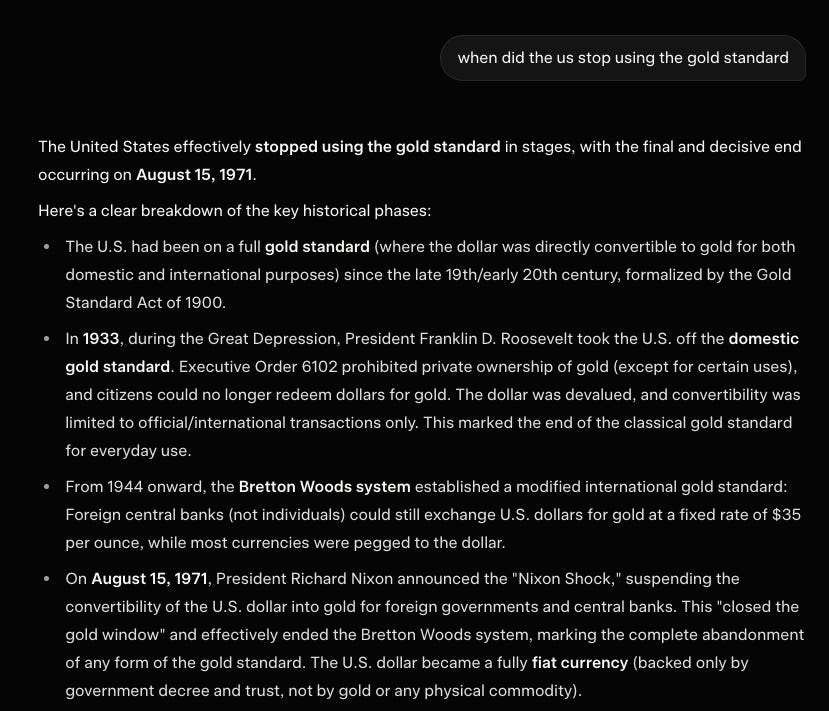
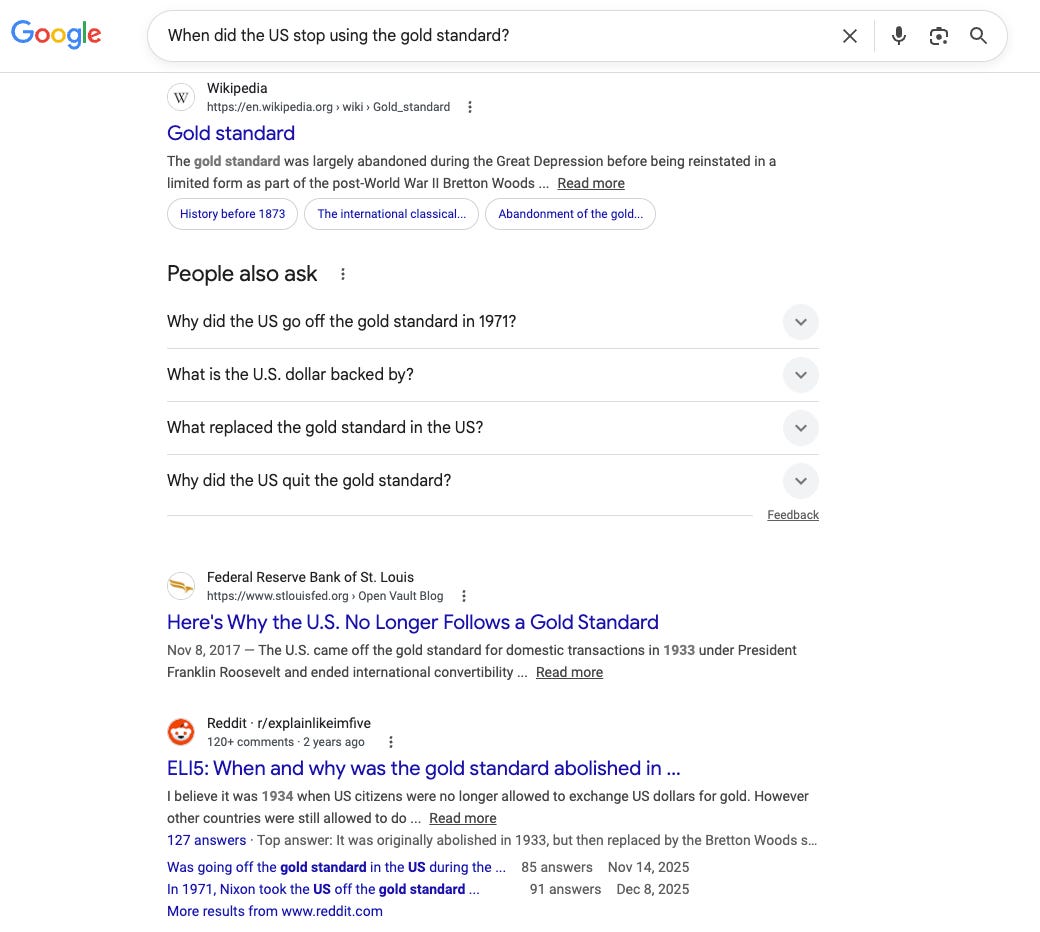
Compared to google’s result, the AI response is clear, concise, confident, and that’s precisely the problem.
The response is so polished, so authoritative, that questioning it feels almost unnecessary. When something gives you a well-formatted, knowledgeable-sounding answer, why would you doubt it?
Here’s where our instincts fail us. We learned internet skepticism the hard way: check who published this, compare sources, be wary of anonymous claims. But AI responses don’t trigger those alarms. They don’t look like a sketchy forum post or a clickbait headline. They look professional. Almost academic.
Our old skepticism was built for a different threat. We know to question a random website. We don’t instinctively question something that sounds like a well-read colleague who’s done the research for us.
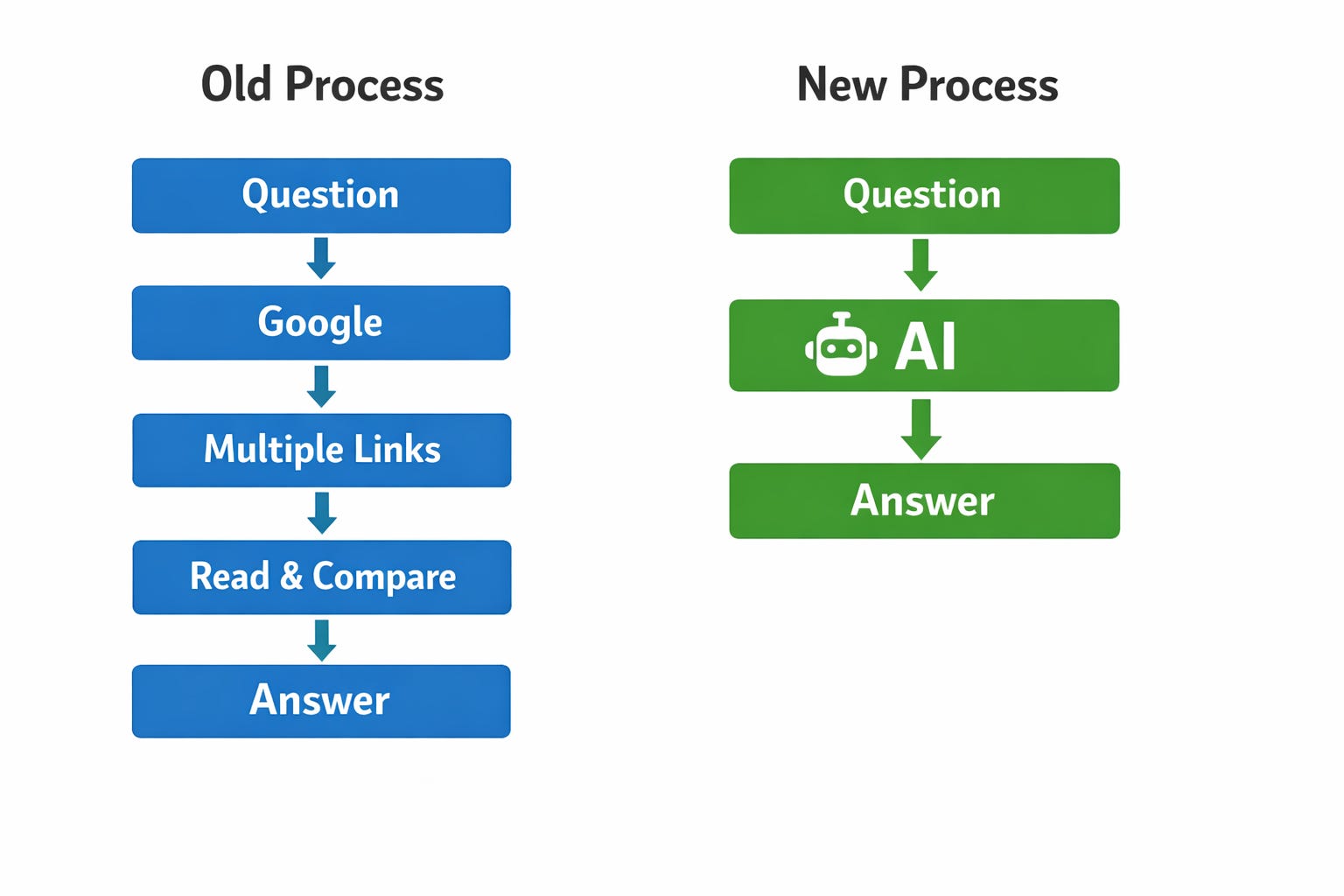
The shift from “search and verify” to “ask and trust” is outpacing our instincts. We need new habits for this new tool.
For trivia, there’s a simple fix: check the sources. Some services make this easy (Perplexity, for example, shows the links it pulled its response from), and you can click through just like you would with Google results. For low-stakes questions, this works fine. You’re basically falling back on your old googling instincts: skim the sources, confirm the answer, move on with your day.
But what happens when the question isn’t trivia? When you’re not asking about the gold standard, but about something that affects your job, your grades, or your decisions? That’s when source-checking gets harder, and when the stakes of blind trust get real.
Love this perspective! Do you think we can truely trust these models, or will verification always be a manual process?